Course-Correction, Not Guilt: A Better Approach to Bad Meals
You just ate a pizza. Half a large, if we're being honest. You open your tracker and see the damage: protein low, calories blown, ultra-processed score through the roof. The number stares back at you in red.
Sound familiar?
Here's the thing. That pizza didn't undo your progress. But the guilt spiral that follows might.
The guilt loop
It plays out the same way every time. You eat something "bad." Your tracker confirms it with red numbers. You feel shame. You tell yourself the day is already ruined, so what's one more poor choice? You stop logging. You stop caring. A few days later, you stop tracking entirely.
Most nutrition tracking reinforces this cycle. The implicit message behind every red number and missed-target alert is simple: you failed. And when people feel like failures, they don't try harder. They quit.
Researchers at the University of Toronto found that rigid dietary control (strict rules, binary pass/fail) is a consistent predictor of binge eating and tracking abandonment. Flexible control, on the other hand, predicts sustained weight management. The tracker design matters as much as the diet itself.
What course-correction looks like
A D-grade dinner doesn't ruin a week of A grades. That's not optimism. That's math.
Your daily compliance score is a weighted average of every meal you log. One rough meal gets absorbed into the bigger picture. Your weekly score averages those daily scores. A single pizza in an otherwise solid week might shift your weekly average by two or three percentage points. Barely a blip.
More importantly, the system doesn't just score you and walk away. It tells you what to do next.
"Your protein was low today. Aim for a protein-dense breakfast tomorrow. Eggs, Greek yogurt, or a protein shake would get you back on track."
No lecture. No punishment. Just a clear, actionable path forward. The coach acknowledges what happened without judging it, then shifts focus to what you can control: your next meal.
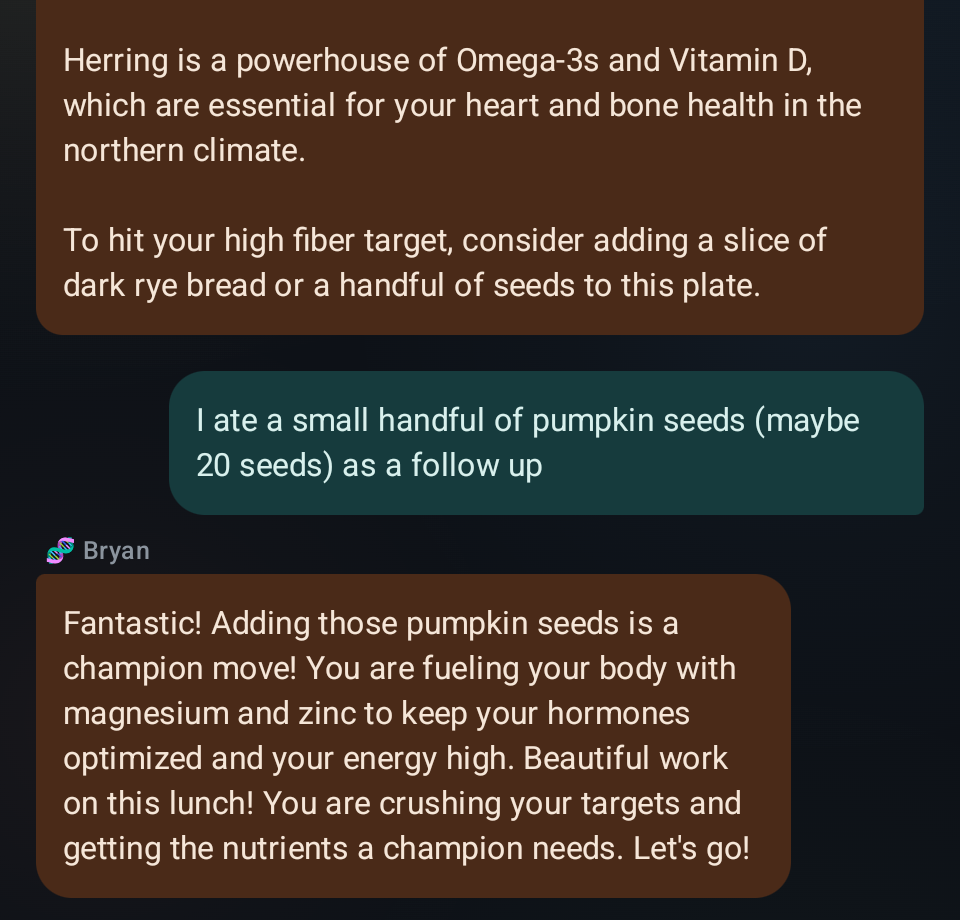
This is one of the core principles I built into MyProtocol. A user who has a rough meal but catches up the next day should feel accomplished, not ashamed. The goal is still achieved. The method was suboptimal for a moment. Both things can be true.
Travel, celebrations, life
A birthday dinner is not a nutritional emergency. A vacation week is not a failure state. A stressful workday where you grabbed whatever was available is not evidence of weak willpower.
These are contexts. And contexts require different guidance, not guilt.
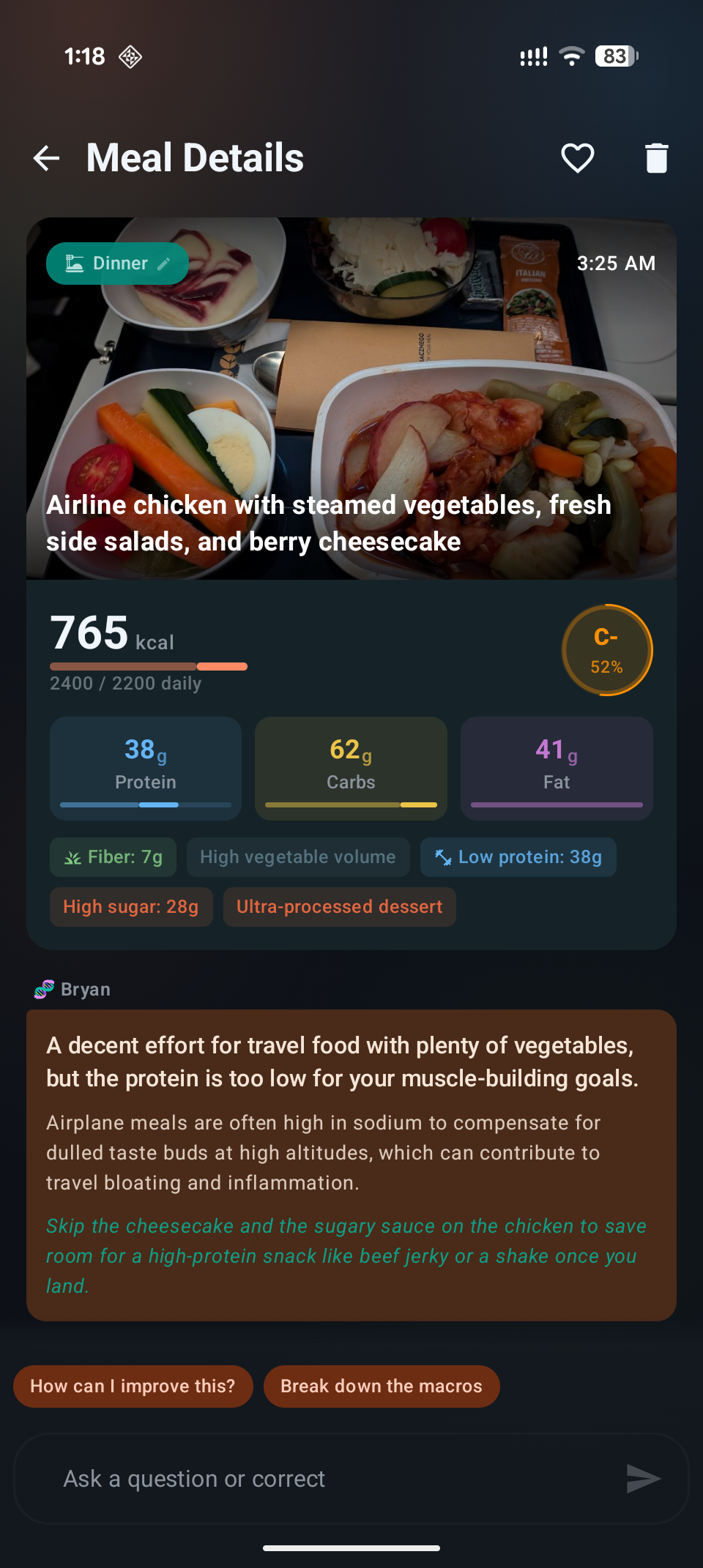
MyProtocol never penalizes treats, imperfect timing, or life happening. That's not a marketing line. It's a design principle baked into every scoring decision and every prompt. When you log a birthday cake, the system tracks it, learns from it, and moves on. It might note that your sugar was high. It won't tell you the cake was a mistake.
Because it wasn't. You were celebrating. That matters.
The coaching adjusts to your situation. Travel day with limited options? The feedback focuses on making the best available choices. Holiday week? The weekly debrief contextualizes the data instead of sounding an alarm.
The math of consistency
Here's a number worth remembering: 80% adherence over six months beats 100% adherence for three weeks.
Perfection is unsustainable. Every long-term study on dietary compliance shows the same pattern. Rigid plans produce early results and rapid abandonment. Flexible approaches produce slower initial progress and dramatically better outcomes over time.
Consider the actual impact of one bad meal. If you eat four meals a day and log consistently, one D-grade meal in an otherwise good week is one out of twenty-eight. Your weekly average barely moves. Your monthly trend doesn't flinch.
The meals that define your health aren't the occasional pizzas. They're the hundreds of ordinary Tuesday lunches and Thursday dinners where you made reasonable choices without thinking too hard about it. Consistency compounds. Individual meals don't define you.
Why this matters
Guilt doesn't improve nutrition outcomes. Data does.
When you stop fearing bad meals and start seeing them as information, something shifts. Logging becomes neutral instead of stressful. You record the pizza the same way you record the grilled salmon. Both are data points. Neither one is a verdict on your character.
You log the pizza. You see the D grade. You read the coach's suggestion about prioritizing protein at breakfast. The next morning, you have eggs and toast. Your daily score recovers. Your weekly average holds steady.
That's not failure. That's the system working exactly as intended. The D grade wasn't a punishment. It was a signal. And you responded to it.
Course-correction says "here's what to do next." Guilt says "you're bad." One moves you forward. The other keeps you stuck.
That pizza? Already in the rearview. Your next meal is what matters now.
Like our approach?
MyProtocol scores your meals, coaches you in real time, and adapts to your goals. Get started in two minutes.
